Seven leadership lessons on resilience from extreme adventurer Adrian Hayes
Thought leadershipArticleNovember 17, 2025
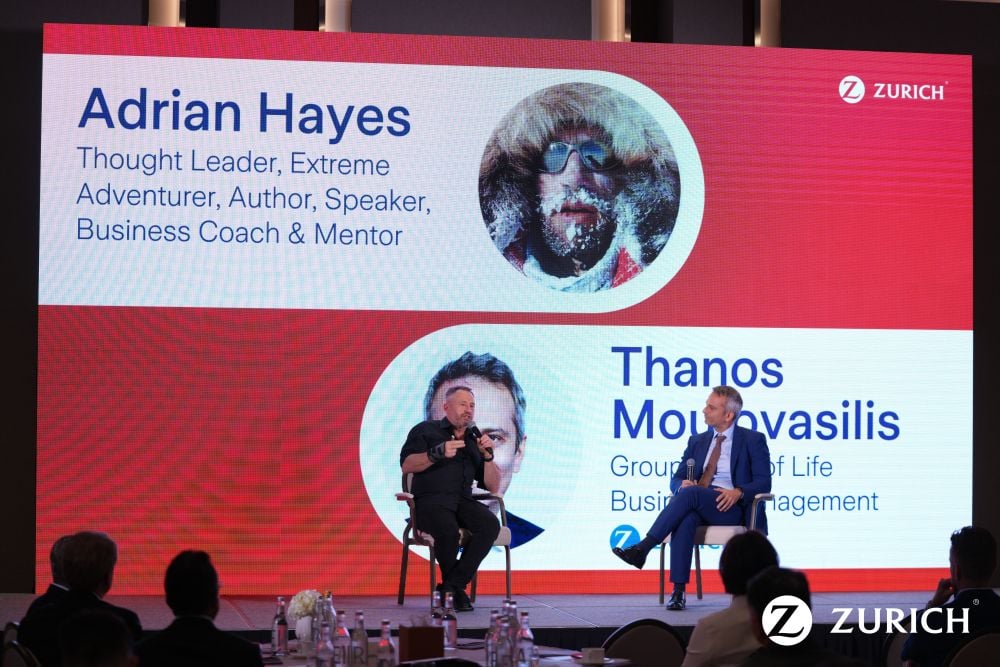
At the recent ‘Building Resilient Futures Together’ event, Thanos Moulovasilis, Group Head of Life Business Management at Zurich, sat down with Adrian Hayes, world-renowned thought leader, extreme adventurer, and coach, for an eye-opening conversation on what it truly means to be resilient. Hayes’ lessons, forged in the world’s harshest environments, offer a powerful blueprint for modern leaders.
Here are the top seven leadership lessons on resilience and authentic achievement drawn from his candid discussion:
1. Embrace challenges they define you
“Life is full of challenges. And it’s the challenges we face in life that define who we become as people, not the successes.”
True growth comes not from comfort, but from struggle. Hayes reminds us that the world is changing fast, and education, and leadership, must evolve to teach the next generation how to meet adversity head-on.
2. Find the gift in every circumstance
“Look for the gift in every circumstance. Because the opposite is being a victim.”
Hayes warns against the “false world” of social media, where victimhood is often glorified. Instead, he urges us to find meaning, even in hardship. Leaders must model this mindset, encouraging teams to seek opportunity in adversity rather than dwell on setbacks.
3. Resilience requires a positive mindset
“We need resilience so that we can deal with these challenges in a positive rather than negative mindset. Don’t get into fear or anger or despair.”
Hayes notes that to thrive, leaders must cultivate positivity, steering their teams away from fear and toward constructive action.
4. Build high-performance teams through trust and vulnerability
“It’s the talks, the techniques, the skills, the awareness, that you need from the team…to build that high-performance, vulnerable, trusting, empathetic support.”
Resilience is not a solo act. Hayes emphasises that the best teams foster trust and vulnerability, supporting each other through open, honest conversations. It’s more than a once-a-year team-building exercise—true teamwork is built daily.
5. Stretch your comfort zone with authentic purpose
“My comfort zone is expanded. There’s always a stretching zone. You can always push yourself. But I do say, do it for authentic reasons.”
The pursuit of challenge should be driven by purpose, not the search for applause or external validation. Hayes warns, “Today, it’s become the pursuit of likes and followers. But that one will never leave you satisfied.” Leaders should encourage authentic goals over superficial ones.
6. Achievement is valuable but don’t let it sabotage you
“Achievement is a great thing, but when you define yourself by your achievements only, there is this anxiety, stress…You’re always trying to get the next achievement.”
Hayes cautions against the trap of overthinking and the endless chase for accomplishment. Leaders must foster environments where reflection and self-acceptance are valued alongside ambition.
7. Never stop growing, keep moving forward
“You don’t stop when you get old. You get old when you stop.”
For Hayes, resilience is a lifelong journey. Whether it’s preparing for the next expedition or pursuing new roles, the key is to keep stretching, learning, and evolving. As he puts it, “Set goals in line with your values, and you’ll probably achieve them. If not, you’ll probably fail. But always, there is value in the journey.”
Hayes’ leadership lessons remind us that resilience is not just about endurance—it’s about growth, authenticity, and the courage to embrace the unknown. As the world continues to change, these principles offer a roadmap for leaders and teams to thrive, together.